There is a moment, maybe even a series of them, when a child realizes that their parents exist in a context outside of them—that they are more than a mother or father. A curtain is raised on a once-private interior life, a past, the uncertainties of the future. The first time one sees a parent cry or express regret or candor can be as jarring as it is enlightening.
For the Korean photographer, Daesung Lee, one of these moments came when he found himself asking his mother, Yi-Boun Shin, whether she would choose to reincarnate—the belief that one’s soul is reborn in another body—to live another life. Her answer, a quiet “No,” was accompanied by the explanation that her life had been too hard to live again. It was a profound moment for her son. “My mother had rarely spoken about her past, especially her life before marriage. She had always been defined through her relationships: she was someone’s wife, someone’s mother. This erasure of individuality was not unique to her but shared by many women in Korea’s patriarchal, Confucian society,” he explains.
Lee’s project, Nirvana, was born out of this close exchange. “Through her story, I wanted to bring visibility to the hidden lives of women of her generation—lives marked by sacrifice, labor, and silence.” The title of the project draws on Buddhist thought; one can obtain the liberation of nirvana by breaking the cycle of reincarnation and shedding all karma.
The photographer had returned to Korea after the loss of a friend. The experience had forced him to confront the reality of loss and, with that, his relationship to his parents. “Death and separation are natural parts of life, yet we often try to avoid thinking about them. That moment made me realize how little time I had spent with my parents since my teenage years,” he says. “As my parents are getting older, I felt the urge to be with them again, to share time and create something meaningful together. I decided to move back to their home for several months, and that is when I had the idea of photographing my mother.”
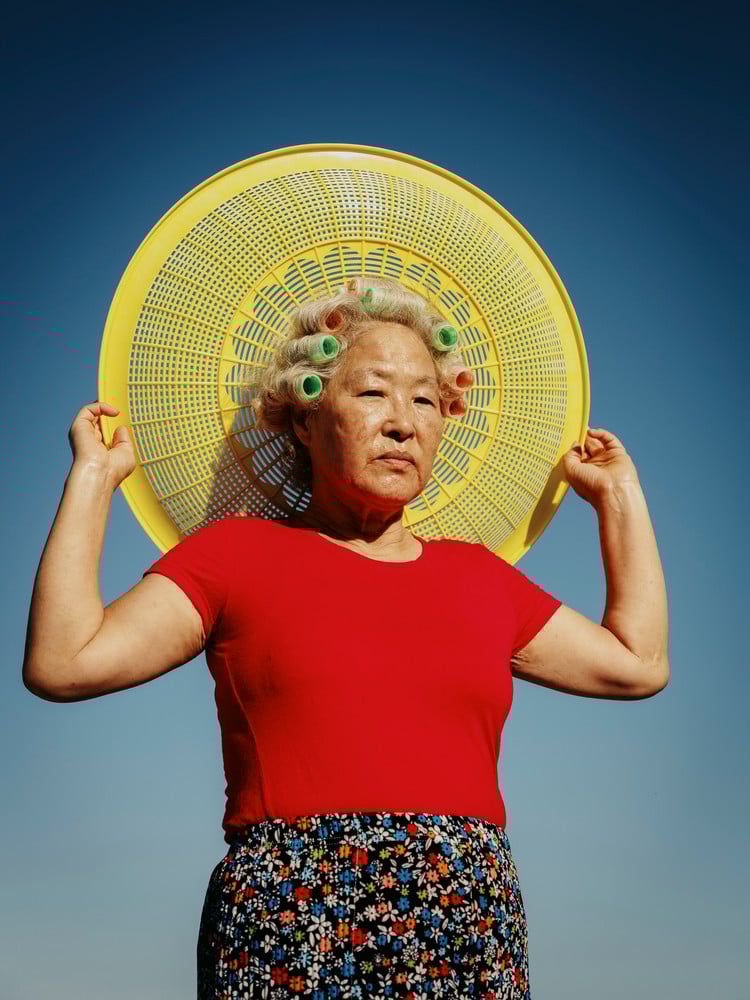
His mother, Lee explains, has spent most of her life in the role of caretaker. “After marriage, my mother moved into my father’s family home. As the eldest son, my father carried responsibility for his parents and younger siblings, which in reality meant my mother carried the weight of caring for them. She managed the household from dawn until late at night, with little rest.” At the time, it was not uncommon for women to be identified as someone’s wife or mother or even by region of birth, rather than by their own names.
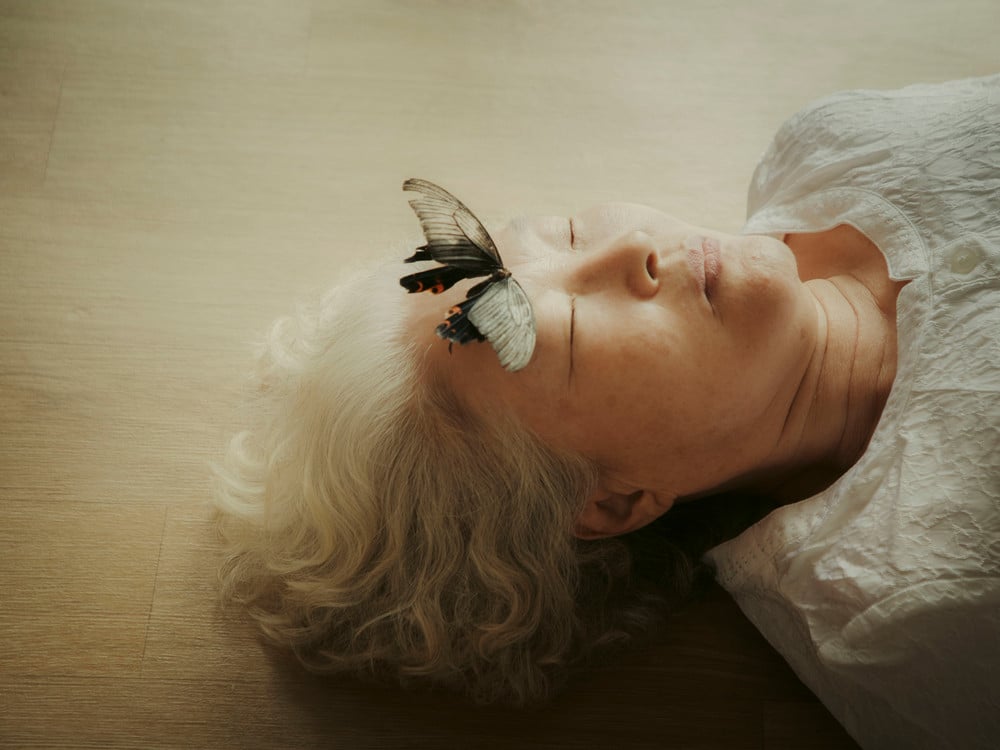
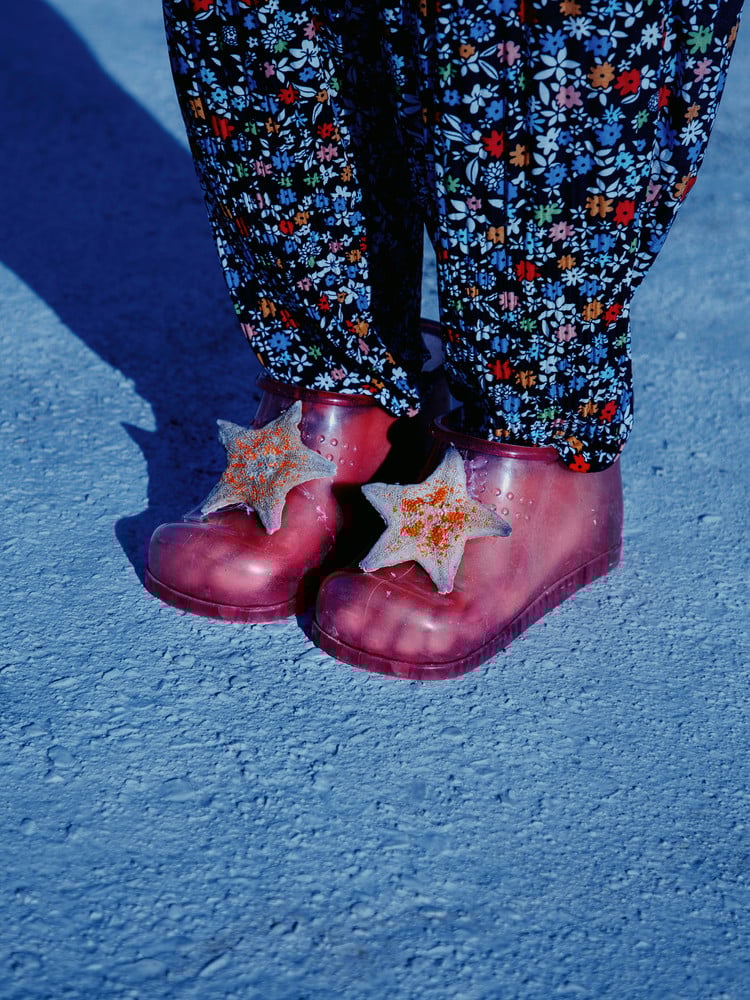
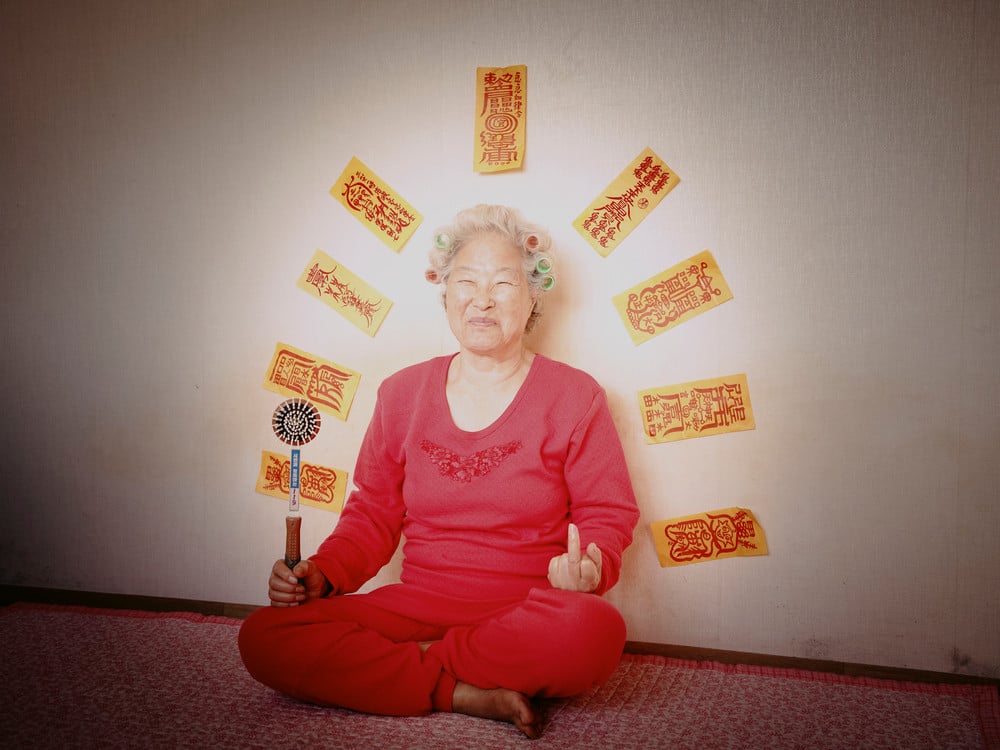
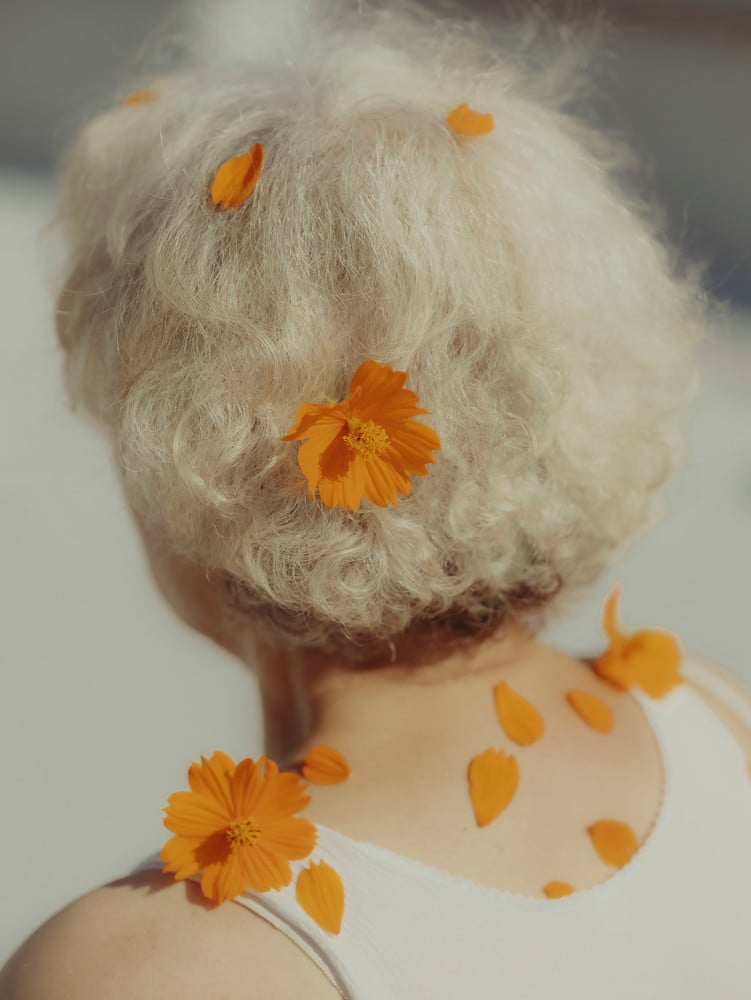
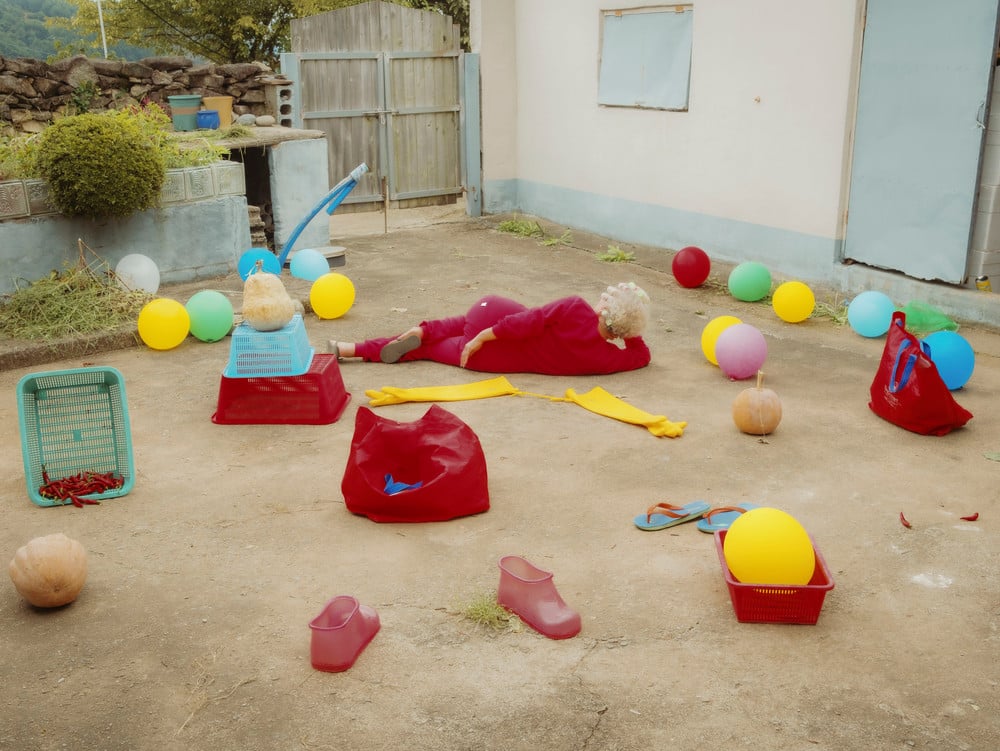
In this new role alongside her son, Shin is not simply the artist’s mother; she is an artistic collaborator. The images they stage and make together are rooted in a mix of childhood memories and conversations between the two. At times, a gesture or object will lead to a scene. From the vegetable garden comes an image both pastoral and peculiar, a cabbage takes the place of a hat, balanced upon Shin’s head. In another, orange flowers decorate her hair. As Lee notes, “The act of making becomes as important as the resulting photograph—it is a shared experience. A memory we build together.”In Nirvana, Shin and Lee have created a world tinged with surreal humor and intimacy. The images are both playful and poignant.
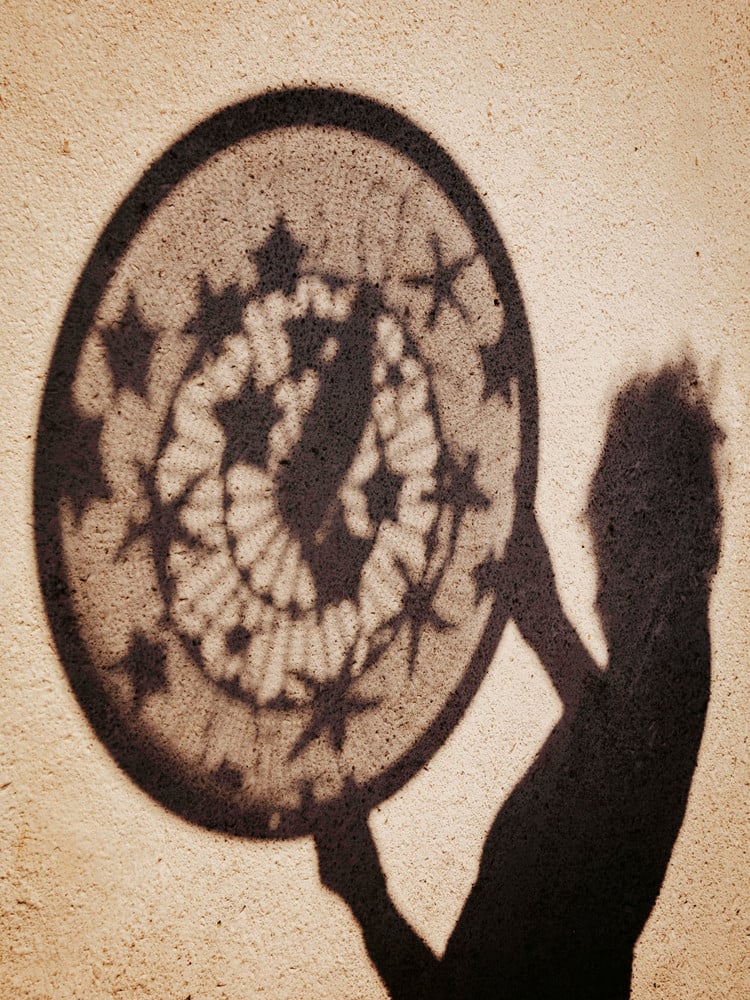
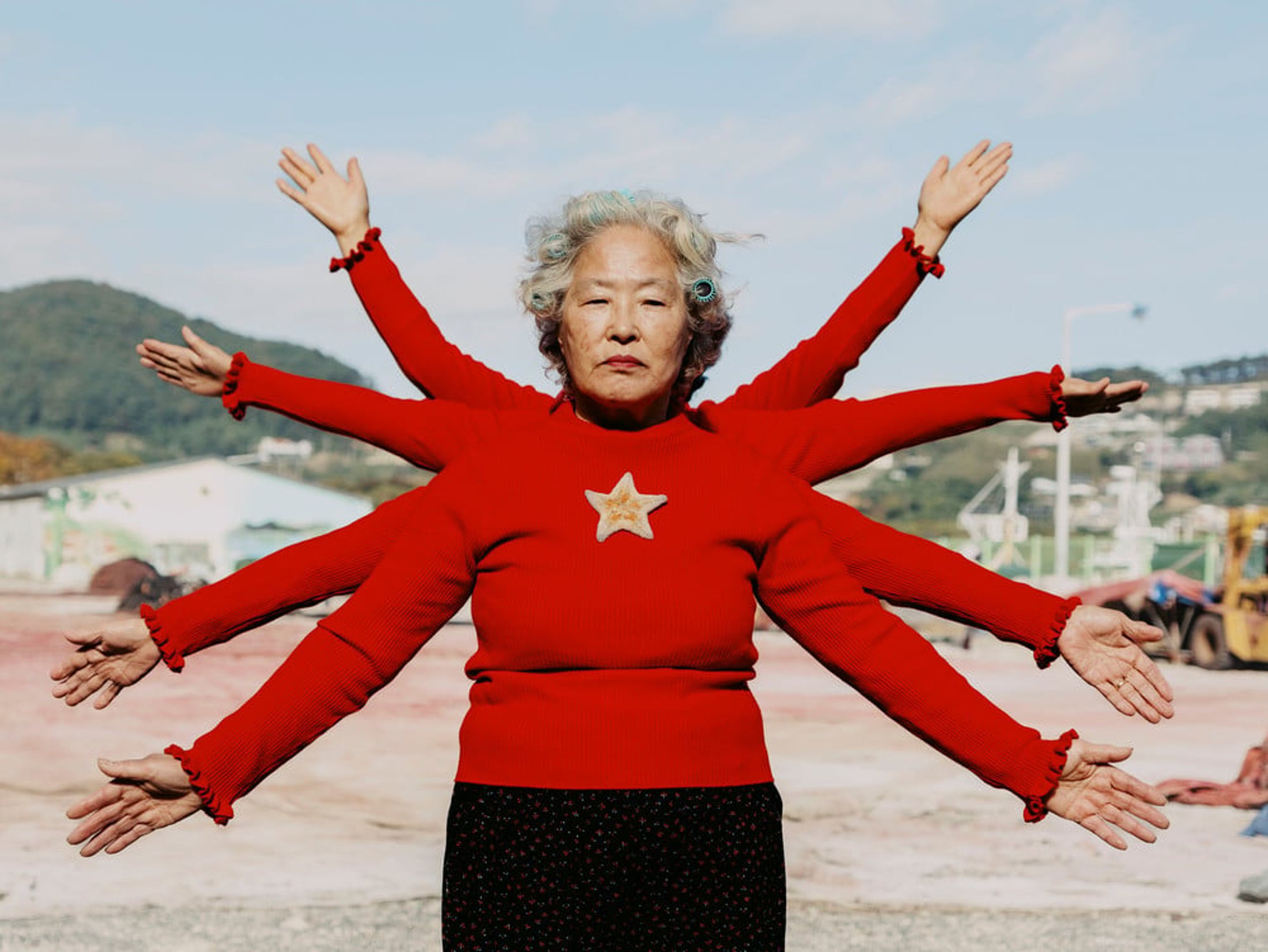
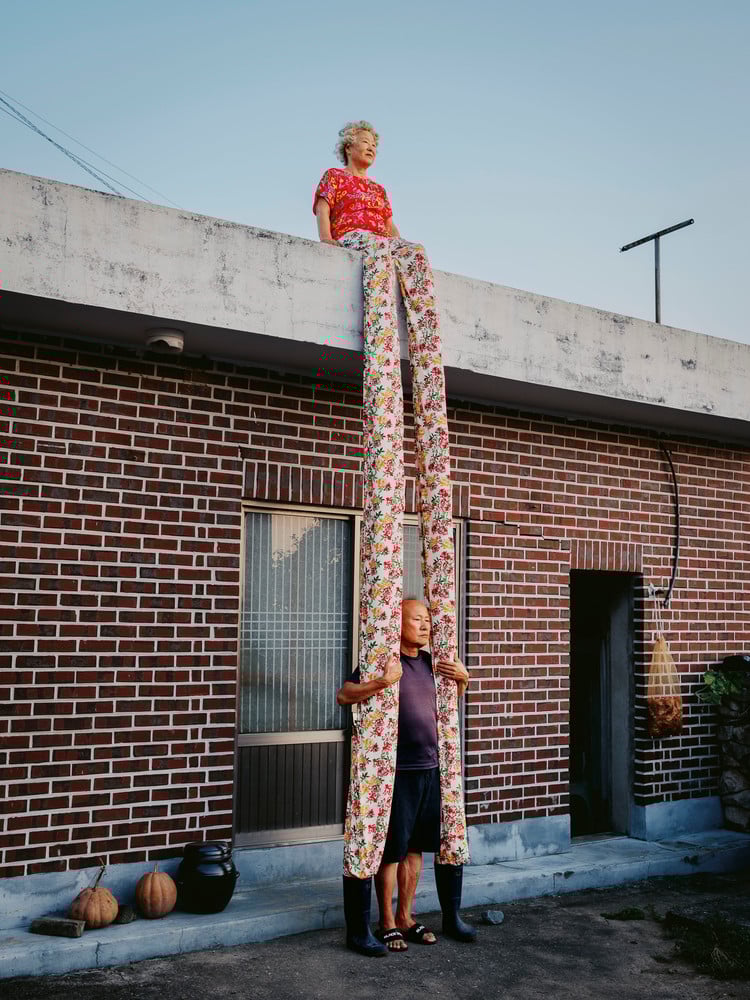
Using household items, Shin becomes the sun, a constellation, and a many-armed deity. She lies on her side amid an array of primary colored objects. In one image, responding to the Confucian maxim that “Man is heaven, woman is earth,” Shin sits upon a building’s roof, her impossibly long legs extending down the facade, where her husband stands below, framed as if within the door of a monument. For all of the images’ verve and tongue-in-cheek winks, there is a grounding in the difficulties of her life. The many-armed goddess radiates a sense of calm, but the image’s caption reads, “Even if I had ten hands, it wouldn’t be enough.”
This blend of hardship and humor is not merely intentional; it is innate. For Lee, the paradox of the two is deeply Korean. “Our history is marked by extremes—colonial occupation, the Korean war, dictatorship, and rapid modernization. These experiences shaped a cultural sensibility where pain and absurdity coexist. Humor became a survival mechanism.” It was a characteristic he noticed in his mother and other women of her generation. “When they gathered, they often used self-deprecating jokes to cope with their exhaustion. Their laughter was bittersweet: a way to endure oppression, to find solidarity, and to momentarily reclaim joy.” The photographs capture this spirit of resilience.
The project itself, Lee notes, “has allowed me to see my mother as an individual, beyond her role as my mother. Observing her daily life, I discovered her skills, her ways of thinking.” This expansion of understanding has led Lee to hope that, “when the time comes, she will find peace by liberation from reincarnation. But if she were to be reborn, I wish for her to live a life of independence, self-determination, and happiness—a life defined not by her relationships to others, but by her own desires and choices.”

In one moving caption, Lee writes, “‘Follow your heart, and live your own life.’ When I said I wanted to study photography, only my grandmother and my mother supported me. Sometimes, I imagine what kind of person my mother might have become if she hadn’t been born in Korea. Perhaps my mother might have become a free-spirited artist.” One of photography’s great gifts is the ability to not only be another version of oneself for a moment, but to enshrine that moment for years to come, to capture a possibility. Perhaps, reincarnations can occur in smaller ways, vibrating across our relationships. With his return to Korea, Lee and Shin, mother and son, experimental artists in their own rights, have spun together a free-spirited exploration of strength and struggle imbued with love and humor.